
If someone still speaks about Central Asia and the Caucasus as if they occupy the margins of higher education, the 2026 results should prompt a serious rethink. This year’s edition shows that the region is not simply present; it is competitive. Universities from Uzbekistan, Azerbaijan, Kazakhstan, Georgia, Kyrgyzstan, and Tajikistan do not appear as symbolic participants. They appear as institutions with real weight in the table, clear internal organization, and growing international visibility. That is one of the most important regional stories in the entire ranking.
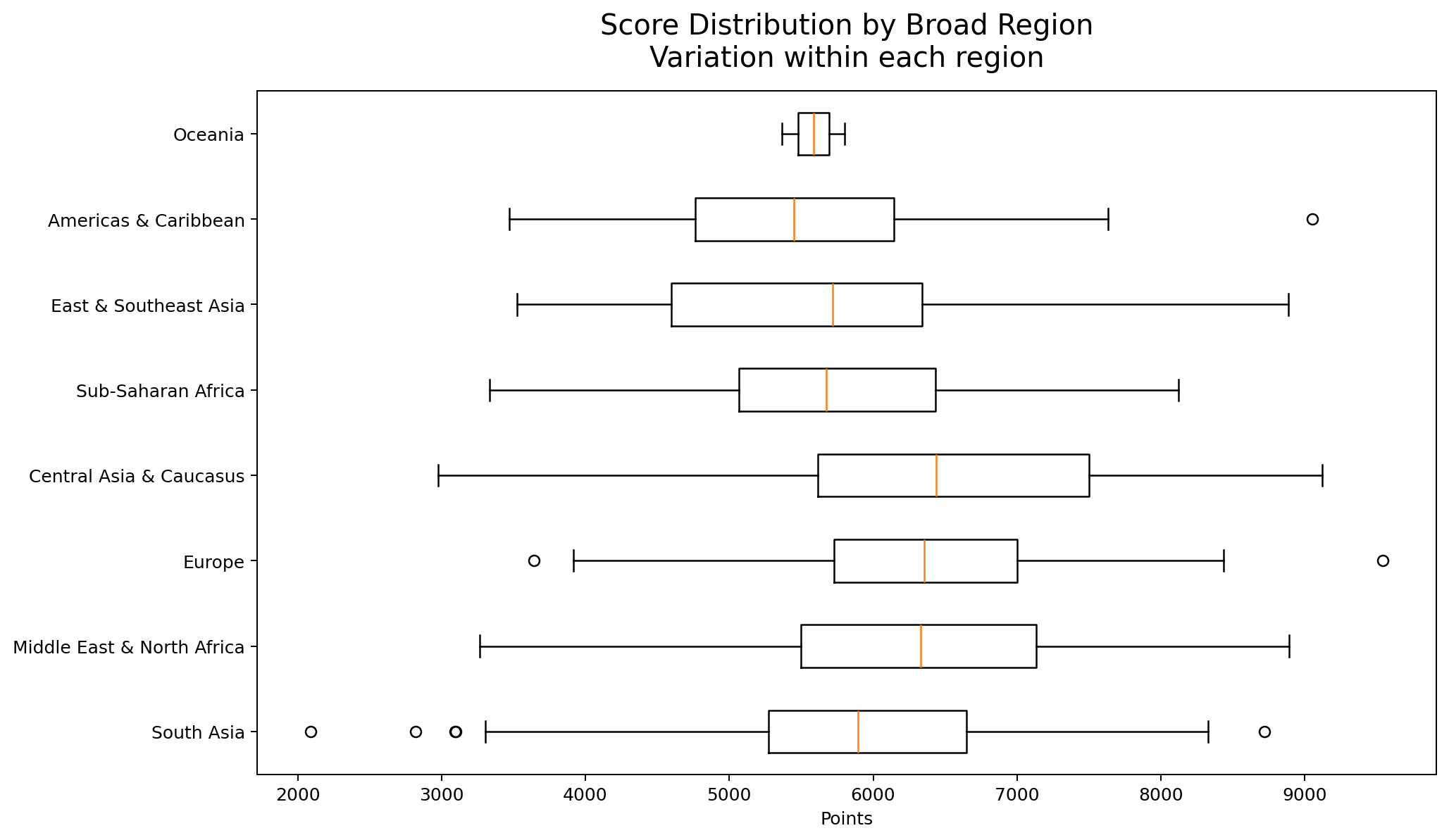
The numbers alone are telling. Central Asia and the Caucasus contribute 62 institutions in the 2026 edition. Their average score is above 6,500 points, and the region places 22 universities in the top 100 and 7 in the top 20. Uzbekistan contributes 18 universities and places several of them near the top. Azerbaijan also contributes 18 and appears strongly in the upper tiers. Kazakhstan enters the top 10. Georgia and Tajikistan add further depth. This is not scattered performance. It is regional density.
What explains this momentum? Part of the answer lies in institutional seriousness. Many universities in the region appear to be taking organizational visibility far more strategically than before. They are investing in clearer public communication, stronger academic branding, better documentation, and more coherent institutional self-presentation. These are not superficial issues. In an age when external evaluation depends heavily on evidence architecture, how a university organizes and communicates itself matters enormously. Institutions that understand this tend to move faster.
There is also a broader systemic dimension. Several countries in the region have spent years modernizing aspects of governance, international engagement, digital communication, and academic management. That work does not always receive global attention, but rankings sometimes reveal it indirectly. When multiple universities from the same system perform strongly, it usually indicates that reforms or institutional habits are not isolated. A stronger ecosystem is beginning to form.
Uzbekistan is a particularly compelling example. With 18 participating institutions and several high placements, it demonstrates both scale and upper-tier quality. Tashkent State University of Law ranks second overall, while Bukhara State Medical Institute and Fergana State University also perform strongly. Azerbaijan shows similar depth with Azerbaijan State Oil and Industry University, Baku State University, and Baku Higher Oil School all placed prominently. These are not just strong names in isolation; they form a regional pattern.
That pattern matters beyond the ranking itself. It changes perception. For too long, many conversations about global higher education have treated recognition as something that flows primarily from West to East, or from globally famous systems to emerging ones. But the 2026 results suggest a more interesting reality. Universities in Central Asia and the Caucasus are not simply waiting for validation. They are building institutional profiles that can command attention on their own terms. They are learning how to translate internal performance into external credibility.
Another reason this regional rise is significant is that it broadens the map of academic aspiration. Students, scholars, and partners are increasingly looking beyond traditional destinations. When universities in the region strengthen their visible performance, they become more attractive as collaborators, study destinations, research partners, and regional anchors. Rankings alone do not produce that transformation, but they can accelerate recognition of it.
For university leaders elsewhere, there is a lesson here. Institutional visibility is not reserved for historically dominant academic systems. It can be built where strategy is clear, evidence is strong, and leadership is persistent. The regional success of Central Asia and the Caucasus in the 2026 edition reflects exactly those elements. It is a reminder that academic geography is changing, and that some of the most interesting institutional work is happening outside the old centers of prestige.
What I appreciate most is that the region’s performance feels earned. It reflects multiple universities doing the patient work of building public credibility. It reflects systems in motion. It reflects a willingness to benchmark, compare, and improve. In a world where higher education is becoming more competitive and more visible at the same time, those habits matter tremendously.
So let us say it clearly: Central Asia and the Caucasus are no longer peripheral to the higher education conversation. They are part of its emerging core. And the 2026 edition of HE Higher Education Ranking has made that impossible to ignore.
The other reason this regional story deserves attention is that it complicates simplistic ideas about how academic strength develops. We often speak as if prestige travels only through long-established pipelines: historically famous universities, deeply networked systems, and institutions already visible in every major conversation. But the Central Asian and Caucasus story suggests something more dynamic. Institutional capability can accelerate when leadership is focused, systems are improving, and universities take external readability seriously.
There is also a generational dimension. Many universities in the region seem increasingly aware that students, partners, and international observers now form judgments in real time through digital and public channels. Institutions that were once primarily read within national or local contexts are now learning to present themselves more effectively to global audiences. That shift has compounding effects. Better presentation leads to stronger recognition; stronger recognition attracts better partnerships; better partnerships reinforce institutional confidence.
For policymakers in the region, this is an encouraging moment. When multiple institutions perform strongly, it becomes easier to argue that higher education should be seen as a national strategic asset rather than a sector to be discussed only through routine administration. Strong ranking visibility can help demonstrate that universities are not passive recipients of policy but active producers of national reputation, talent, and intellectual confidence.
#CentralAsia #Caucasus #HigherEducation #HERanking #Uzbekistan #Azerbaijan #UniversityLeadership #GlobalHigherEducation