
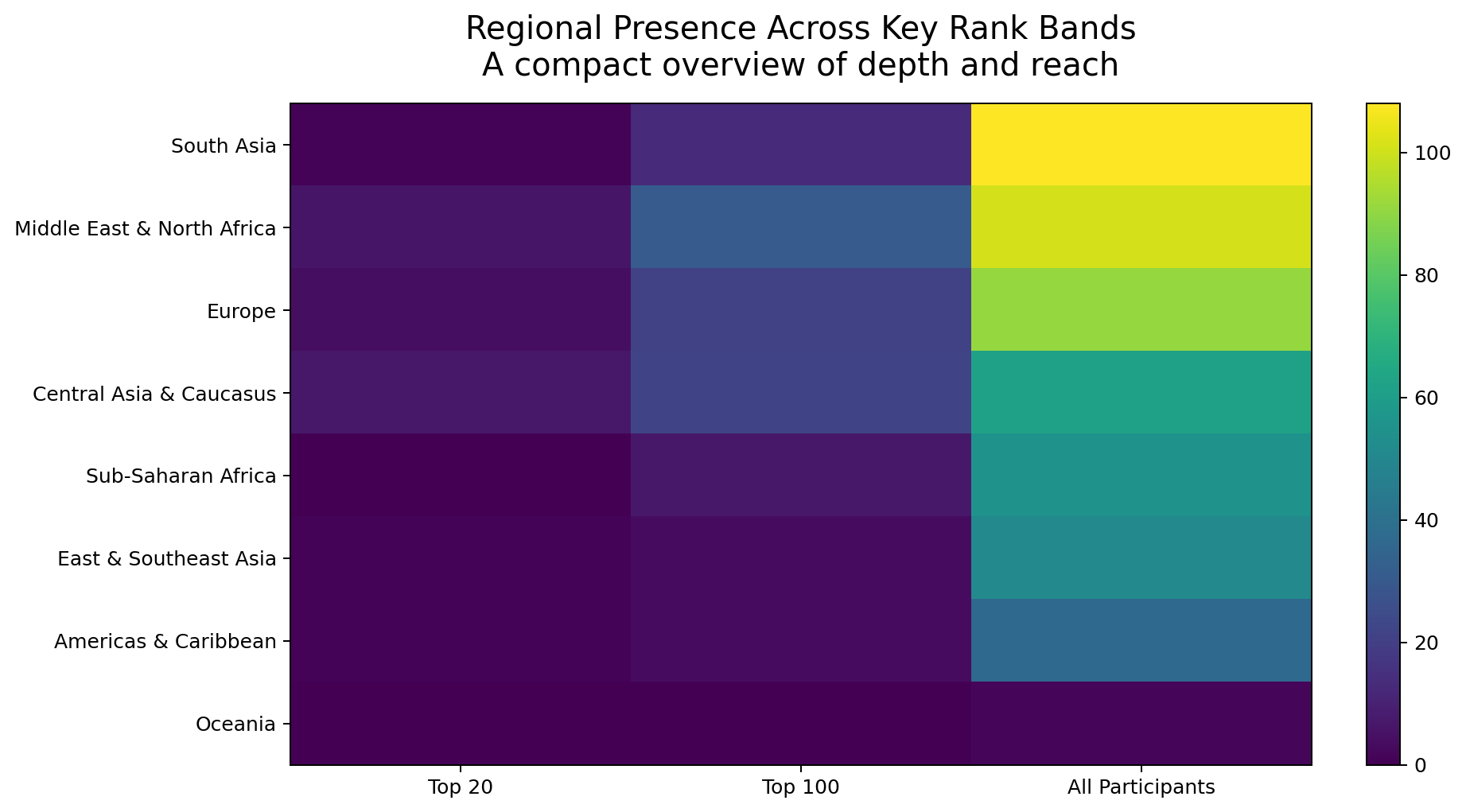
One of the most striking things about the 2026 edition of HE Higher Education Ranking is not a single institution, not even a single score. It is the geography. When a ranking brings together 507 universities from 119 countries, the table stops being a narrow competition and starts becoming a global signal. It tells us where ambition is accumulating, where systems are mobilizing, and where universities are no longer content to remain outside international conversations. That is exactly what this edition reveals. The center of gravity in higher education is not fixed. It is moving, widening, and becoming far more plural than old assumptions allowed.
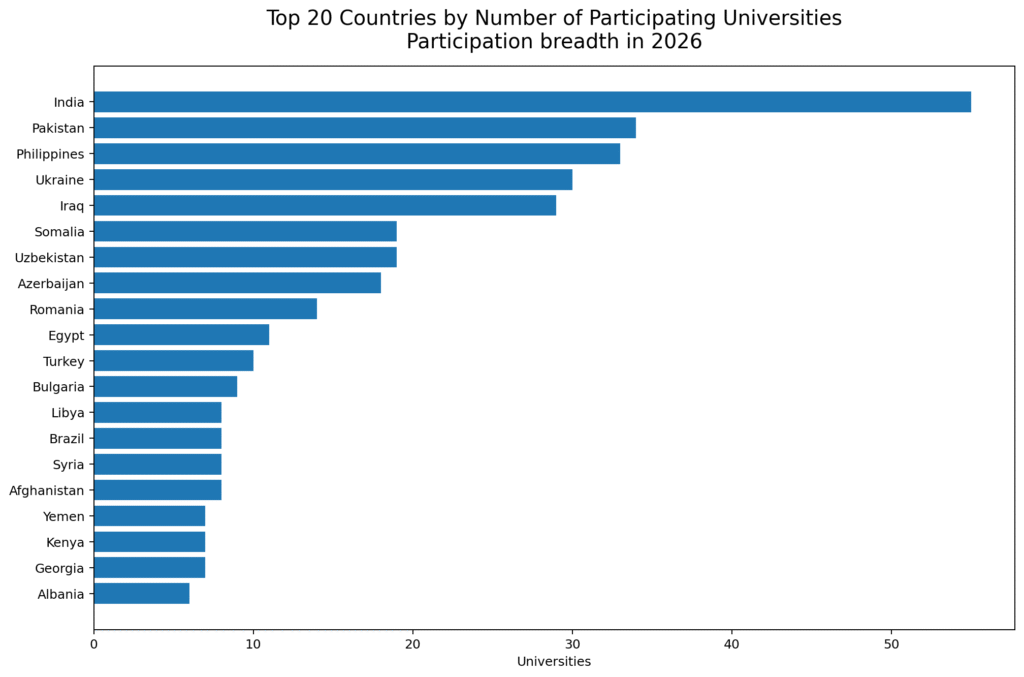
Look at the participation patterns and the message becomes even clearer. India appears with 54 universities. Pakistan contributes 34. The Philippines and Ukraine each contribute 30. Iraq appears with 27. Azerbaijan, Uzbekistan, and Somalia each contribute 18. Romania contributes 14, while Egypt contributes 11. These are not incidental numbers. They represent a broad field of institutions that are choosing to step into a common evaluative space. Participation at this level is not just administrative. It is cultural. It reflects confidence, readiness, and a willingness to benchmark.
This matters because the international ranking conversation has long been dominated by a familiar script. A small number of highly visible universities occupy the symbolic center, while hundreds of active, developing, reform-oriented institutions remain poorly represented in the global imagination. The 2026 results complicate that script in a productive way. They show that serious institutions are emerging, improving, and asserting their presence across diverse academic environments. They may not all have the same history, resources, or geopolitical advantages, but they do have something else: movement. And movement is one of the most important predictors of future relevance.
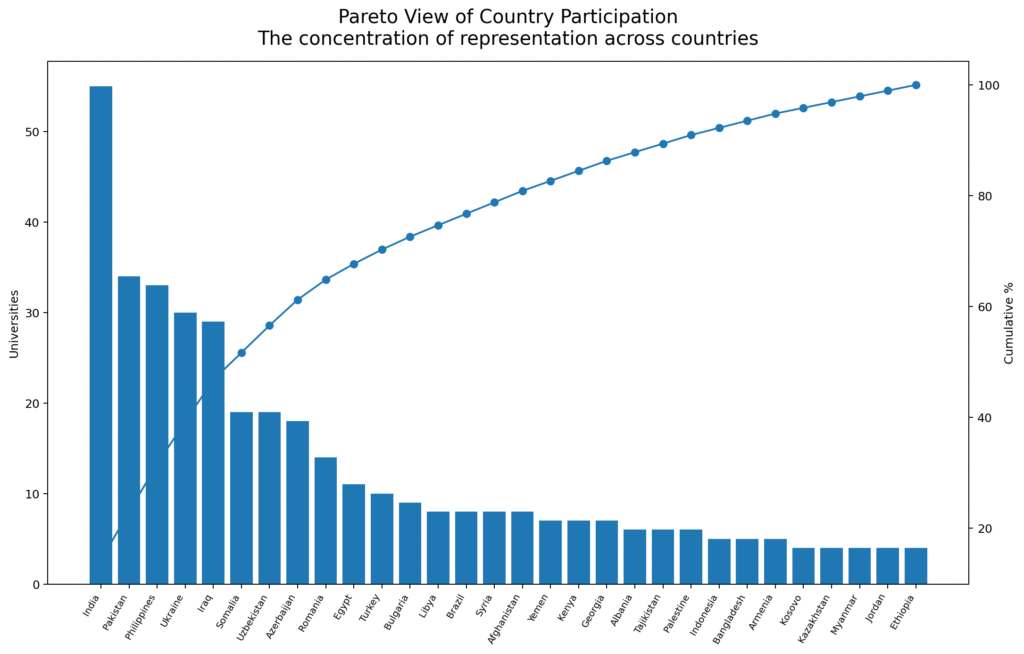
There is also a deeper lesson here about participation itself. When many institutions from the same country or region enter a ranking framework, the result is not only competition among universities. It is also a new kind of system visibility. Countries begin to see how broad their institutional pipeline is. Policymakers can observe where density exists and where quality concentration appears. University leaders can compare themselves not only with global giants, but with peers operating in adjacent conditions. That creates a much healthier environment for improvement. Institutions learn faster when they can compare themselves to universities that face comparable regulatory, financial, and developmental realities.
The wide distribution of participating countries also pushes back against an outdated idea: that ranking relevance belongs primarily to traditional academic powerhouses. That view no longer fits the reality on the ground. In 2026, institutional credibility is increasingly being built in places that combine determination with strategic adaptation. Many universities in emerging systems are not waiting to be invited into recognition. They are constructing their presence through better documentation, stronger external communication, more coherent quality systems, and clearer academic positioning. Rankings that capture this shift do something important. They widen the field of academic visibility.
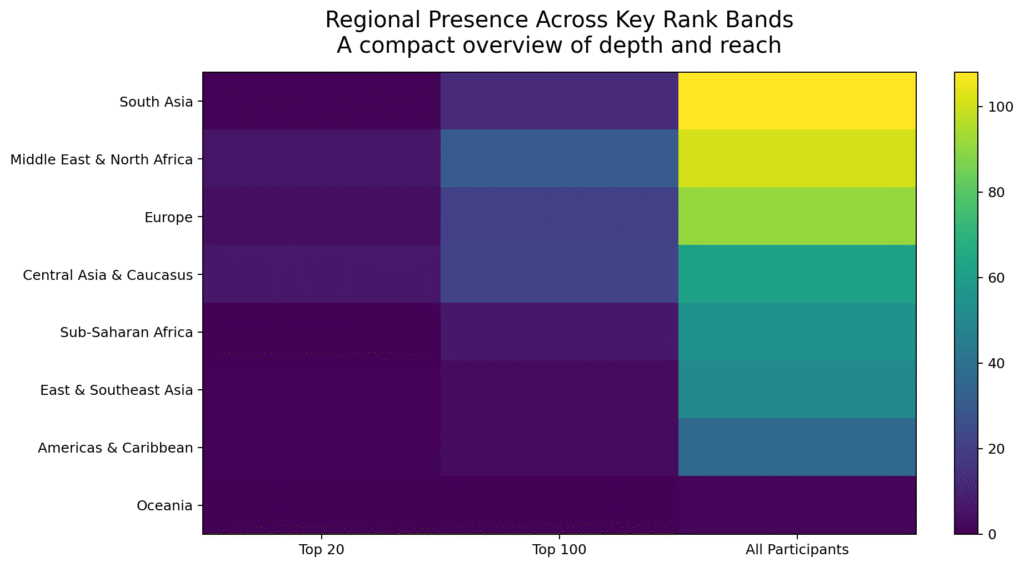
At the same time, broad participation should not be misread as mere expansion. Numbers alone are never enough. What matters is the quality of engagement behind those numbers. But the participation map tells us where institutional seriousness is gathering. It tells us which systems are producing universities that want to compare, learn, and be counted. That has enormous significance for the future of international higher education. The next decade will be shaped not only by the institutions already recognized everywhere, but by the many institutions that are now entering global evaluative frameworks with sharper strategies and stronger self-awareness.
Another point worth emphasizing is that diversity in participation helps rankings become more intellectually honest. A framework tested only on one type of institution or one part of the world can become rigid, even unintentionally biased. A framework tested across 119 countries faces a more demanding challenge. It must work across different cultures of evidence, different website ecologies, different institutional traditions, and different development stages. In that sense, diversity is not a public relations feature. It is a methodological test. And any ranking that remains meaningful across such variation deserves close attention.
For university leaders, the lesson is immediate. Participation is not just about announcing a result on social media, although many institutions understandably do that. Participation is also about entering a wider conversation on performance, perception, visibility, and readiness. It is about understanding where one’s institution stands within a genuinely international field. It is about turning comparison into insight rather than anxiety. Above all, it is about refusing invisibility. In today’s higher education environment, institutions that are doing serious work need frameworks that allow that work to be recognized, interpreted, and improved.
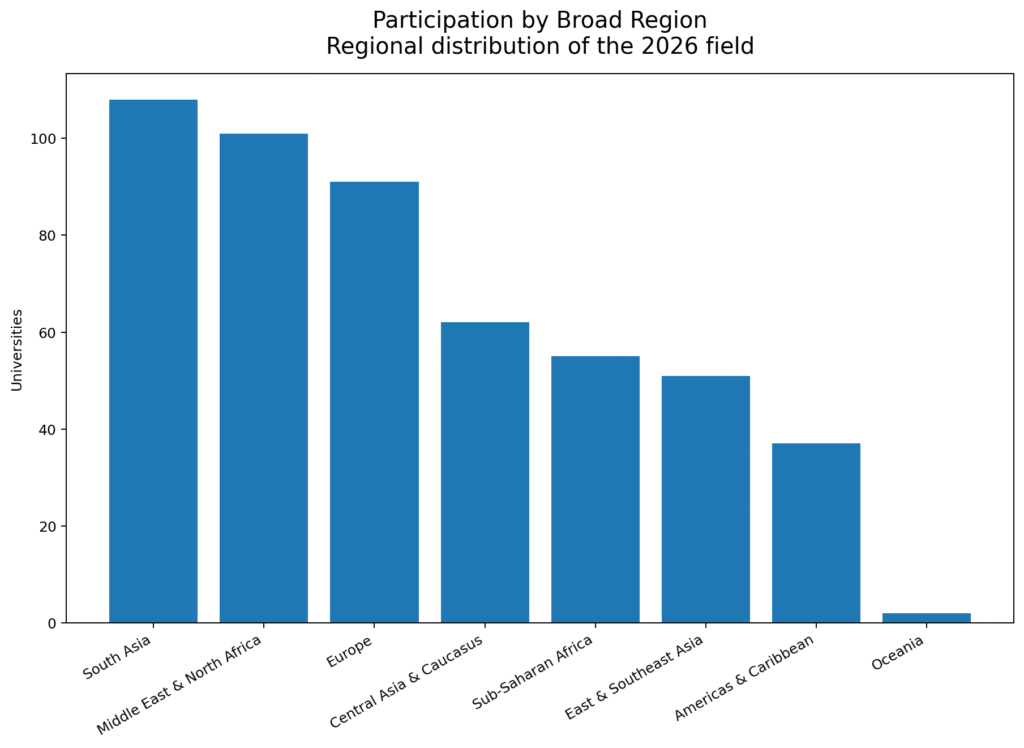
What I appreciate most in the 2026 edition is that it tells a story of widening inclusion without sacrificing competitive seriousness. Universities from different continents, sizes, histories, and missions appear in the same landscape, but not as interchangeable units. They appear as institutions with specific strengths, specific developmental paths, and specific opportunities. That is how the global higher education conversation should evolve: not toward uniformity, but toward richer comparability.
If there is one sentence that captures the spirit of this edition, it is this: global higher education is being rebalanced in public view. More institutions are stepping forward. More countries are being represented. More academic systems are claiming space in the global narrative. Rankings do not create this transformation on their own, but they can reveal it. HE Higher Education Ranking 2026 has done exactly that.
#HigherEducation #HERanking #GlobalHigherEducation #UniversityLeadership #AcademicVisibility #QualityCulture #InternationalHigherEducation