
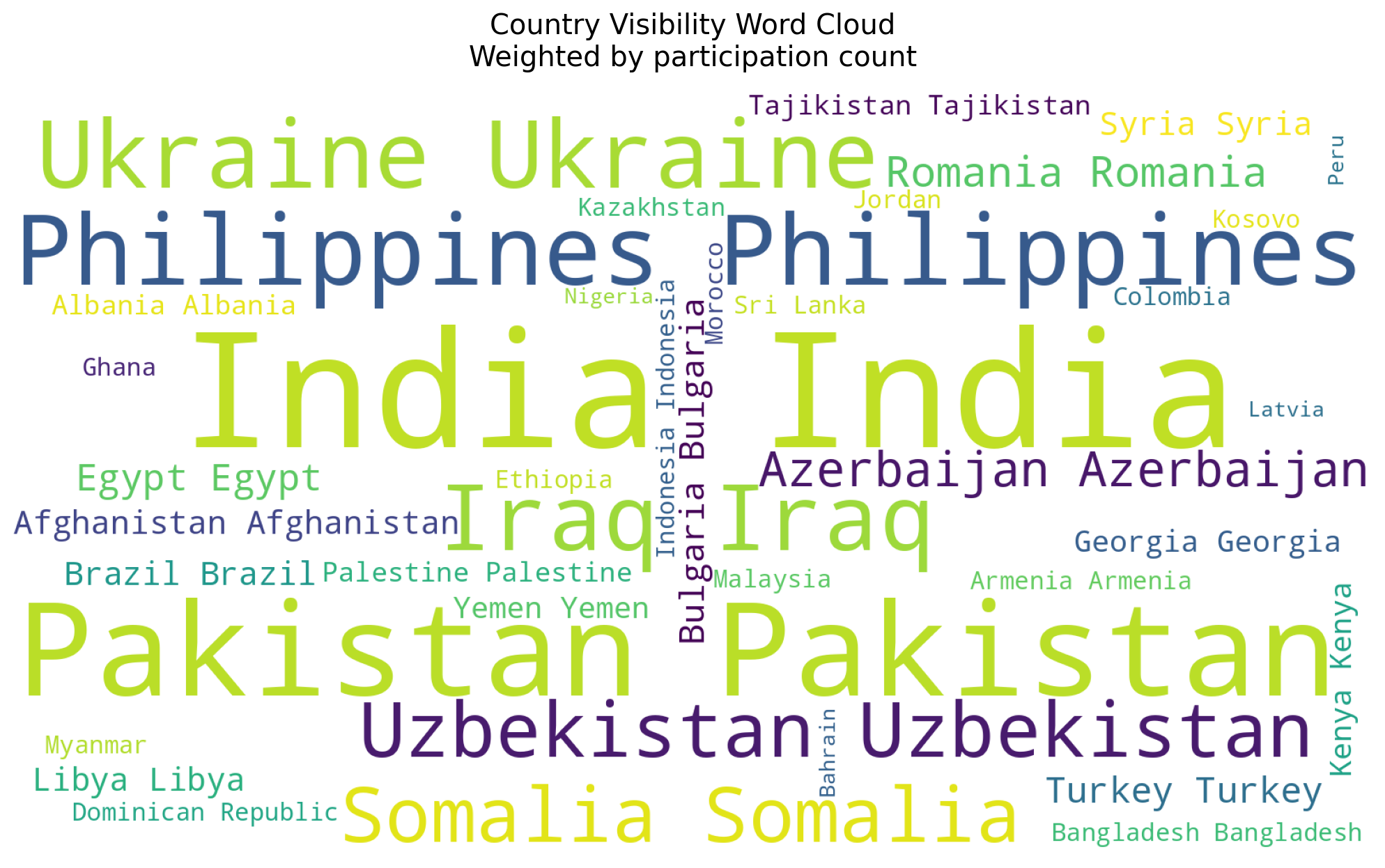
A healthy ranking should do more than sort universities. It should also broaden the field of who gets seen. One of the most refreshing features of the 2026 edition of HE Higher Education Ranking is that it creates visible space for institutions from academic geographies that are too often overlooked, underestimated, or treated as peripheral in mainstream global discourse. This matters enormously because invisibility is one of the quietest forms of inequity in higher education.
The upper part of the table alone makes this point powerfully. We see strong institutions from Uzbekistan, Kazakhstan, Azerbaijan, the Turks and Caicos Islands, Jordan, Myanmar, Iraq, Palestine, and Bosnia and Herzegovina, among others. These appearances are not tokenistic. They are competitive. They show that institutional capability exists far beyond the usual centers of recognition. Once that becomes publicly visible, the global conversation becomes more honest.
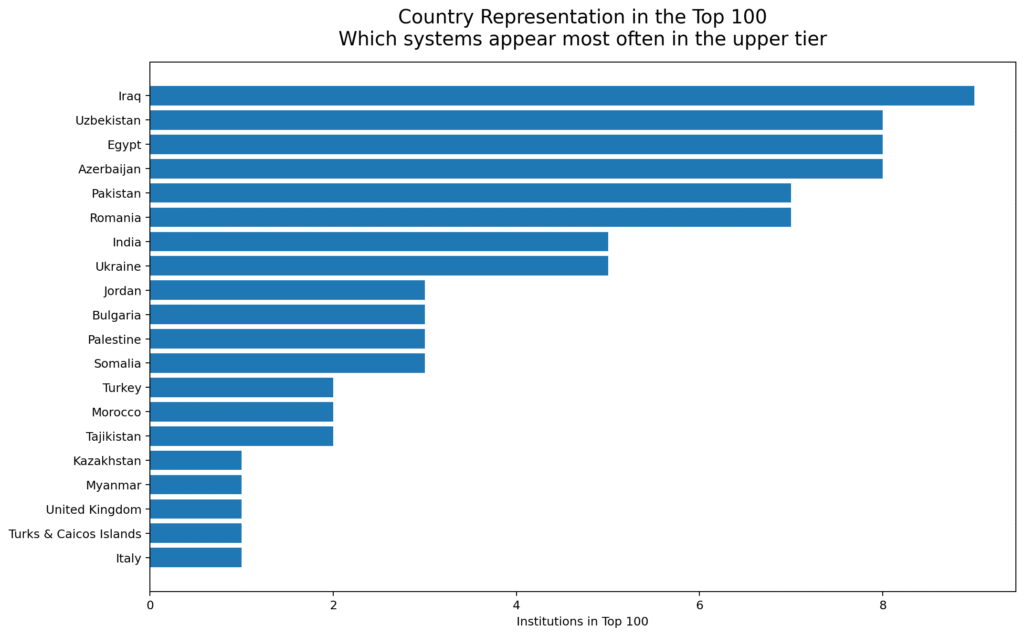
There is something intellectually important about this. The world of higher education is much larger than the list of institutions most people can name instantly. Serious universities are doing serious work in places that global discourse often flattens into stereotypes. Some operate in small states. Some in transitional systems. Some in conflict-affected or economically pressured environments. Some in regions rarely treated as knowledge centers by international media. Yet they build programs, systems, evidence cultures, partnerships, and public academic identities with considerable commitment.
A ranking that can recognize this does something valuable. It helps shift attention from inherited visibility to earned visibility. It invites readers to become more curious about where academic capability is rising. It also gives institutions in these geographies a stronger platform from which to speak to partners, students, researchers, and stakeholders. Recognition is not everything, but it does change the terms of engagement.
For me, this is one of the most encouraging dimensions of the 2026 edition. It tells universities in non-traditional academic geographies that they do not need to wait politely on the margins of global recognition. If they build strong systems and present themselves clearly, they can enter the conversation with authority. That is a powerful message, and one the sector needs.
This wider visibility has practical consequences too. Once institutions from overlooked geographies are seen more clearly, partnership maps can change. Students gain new destination possibilities. Researchers discover collaborators they might otherwise never have considered. National systems gain stronger examples to point to. Even internal morale shifts when universities recognize that their work is not confined to local acknowledgment.
There is also a healthy corrective embedded in this process. Global higher education discourse often confuses fame with quality because fame is easier to circulate. But fame can be historically inherited, while quality must usually be maintained. Rankings that bring less familiar but high-performing institutions into view help loosen that confusion. They encourage the sector to become more curious and less automatic in its judgments.
In that sense, visibility for non-traditional academic geographies is not only a benefit to those institutions. It benefits the global conversation itself. It makes our understanding of higher education less narrow, less repetitive, and closer to reality.
And that may be one of the most valuable achievements of this edition: it expands the imagination of where academic seriousness can be located. Once that imagination expands, the sector becomes fairer, smarter, and more open to real excellence in places that would otherwise remain unseen.
For university leaders in these contexts, the message is empowering. They do not need to wait for others to describe them before they become visible. They can build that visibility themselves through institutional discipline, evidence, and strategic presentation. That is one of the quiet but powerful promises contained in the 2026 results.
It also means that observers should read the table with curiosity rather than habit. Instead of asking why an unfamiliar institution appears strongly, perhaps the better question is why we were not paying attention to it sooner. That shift in attitude would make the entire higher education conversation more intelligent.
What I find most valuable here is the democratic effect of recognition. When more geographies become legible, the idea of excellence itself becomes less monopolized. That is good for universities, good for students, and good for the intellectual health of the sector as a whole.
#HigherEducation #HERanking #AcademicVisibility #GlobalHigherEducation #UniversityLeadership #InclusionInHigherEd #InstitutionalRecognition