
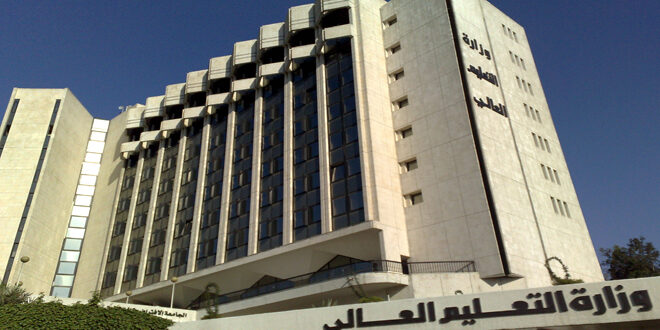
Comparative diagnostic report based on the 2026 results workbook and the official 25-criterion HE methodology.
This report isolates the Syrian institutions that appeared in the 2026 edition and reads their scores as a performance profile rather than as a simple list of rank positions. The purpose is to identify where Syrian universities are already comparatively strong, where their shared weaknesses lie, and what each institution appears to need most before the next cycle.
1. Universities included in the Syrian cohort
| Syrian position | University | Global rank | Points | Overall standing |
| 1 | Hawash Private University | 154th | 6634 | upper-middle tier |
| 2 | Al Andalus University For Medical Sciences | 262nd | 6008 | near median |
| 3 | Ebla Private University | 327th | 5630 | lower-middle tier |
| 4 | Zaytouna International University | 444th | 4508 | bottom quartile |
| 5 | Wadi International University | 447th | 4483 | bottom quartile |
| 6 | University of Kalamoon | 459th | 4297 | bottom decile |
| 7 | Al-Shamal Private University | 462nd | 4271 | bottom decile |
| 8 | Maaref University of Applied Sciences | 502nd | 3263 | bottom decile |
The Syrian cohort is internally stratified. Hawash Private University leads the national group by a clear margin, followed by Al Andalus University For Medical Sciences and Ebla Private University. A second band is formed by Zaytouna International University, Wadi International University, the University of Kalamoon, and Al-Shamal Private University. Maaref University of Applied Sciences appears as the lowest-scoring Syrian institution in this edition. This spread matters because it shows that Syrian universities are not all facing the same problem: some already have visible institutional capacity, while others remain constrained by deeper structural gaps.
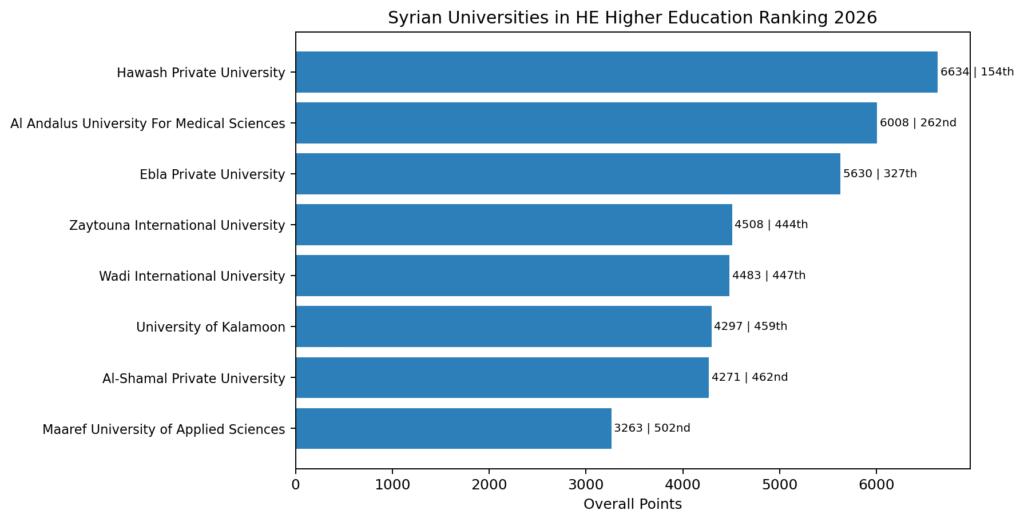
Figure 1. Overall points and global ranking positions of Syrian universities in the 2026 edition.
2. Cross-cutting strengths and weaknesses
At the cohort level, the strongest Syrian signal is Faculty & Staff. On average, Syrian universities perform above the global median in this criterion, and in some cases well into the top quartile. That suggests that human capital remains one of the most important foundations of Syrian higher education performance. Foreign Language and Linguistic Impact is another relative bright spot, which indicates that multilingual presentation and language-oriented positioning are stronger than many other operational areas.
The middle of the profile is more mixed. Student Success and Graduation is not a standout strength, but it is close to the global middle, which means several Syrian institutions are managing completion and progression more credibly than their overall ranks might imply. Funding, Finance, and Grants also offers some promise, although this strength is uneven and concentrated in a smaller number of universities. Internationalization appears similarly uneven: it exists, but it is not yet strong enough across the whole cohort to alter the collective picture.
The weakest common area is Support of Distance Learning. That is followed by Sustainability and Management, Lifelong Learning, Recreation and Student Support, and Labor Market performance. This is a revealing cluster. It suggests that the main challenge is not only academic delivery itself, but the broader ecosystem around it: digital readiness, student-life infrastructure, continuing education, graduate employability, and documented institutional maturity. In other words, many Syrian universities still look more capable of delivering degrees than of demonstrating a fully integrated contemporary university model.
The cohort also underperforms in innovation, IT infrastructure, and future-oriented institutional positioning. These dimensions are increasingly important because they shape how universities are read by students, partners, employers, and external evaluators. A university may be doing meaningful work internally, but if its digital systems, innovation agenda, public communication, or labor-market linkage remain weak, the institution will still appear underdeveloped in a competitive ranking environment.
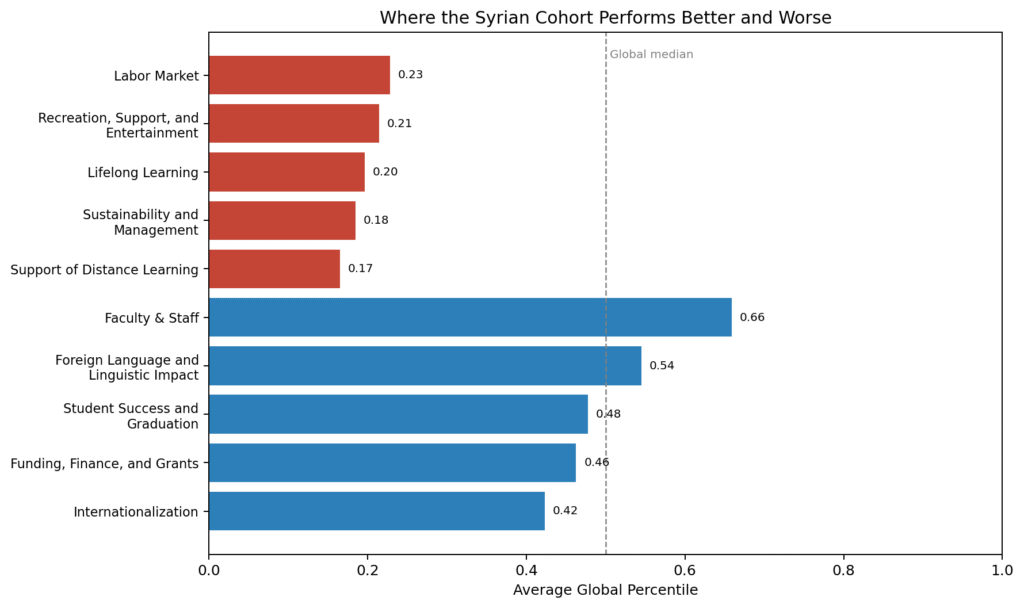
Figure 2. Average global percentile positions of the strongest and weakest criteria across the Syrian cohort.
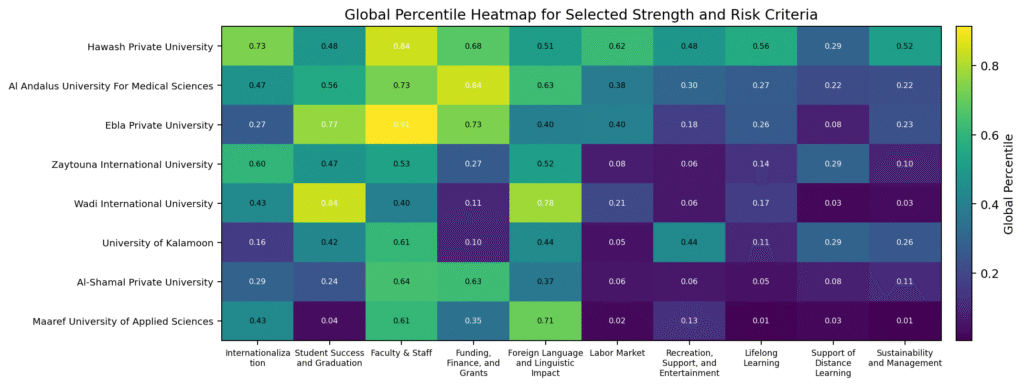
Figure 3. Global percentile heatmap for selected strength and risk criteria across Syrian universities.
3. University-by-university profiles
| University | Global rank / points | Strongest visible areas | Main vulnerabilities |
| Hawash Private University | 154th | 6634 | Equity, Equality, Diversity, and Inclusion (top 10%); Facilities & Resources and Management (top quartile); Faculty & Staff (top quartile) | Research (bottom quartile); Support of Distance Learning (lower-middle tier); Admissions & Enrollments (lower-middle tier) |
| Al Andalus University For Medical Sciences | 262nd | 6008 | Funding, Finance, and Grants (top quartile); Facilities & Resources and Management (top quartile); Academic Transparency (upper-middle tier) | Quality Assurance, Accreditation, and Networking (bottom quartile); Support of Distance Learning (bottom quartile); Sustainability and Management (bottom quartile) |
| Ebla Private University | 327th | 5630 | Faculty & Staff (top 10%); Data Management (top quartile); Student Success and Graduation (top quartile) | Media (bottom decile); Support of Distance Learning (bottom decile); Information Technology and Computer Equipment (bottom quartile) |
| Zaytouna International University | 444th | 4508 | Admissions & Enrollments (top quartile); Internationalization (upper-middle tier); Faculty & Staff (above median) | Information Technology and Computer Equipment (bottom decile); Data Management (bottom decile); Innovation and Creativity (bottom decile) |
| Wadi International University | 447th | 4483 | Student Success and Graduation (top quartile); Foreign Language and Linguistic Impact (top quartile); Social and Cultural Impact (upper-middle tier) | Information Technology and Computer Equipment (bottom decile); Support of Distance Learning (bottom decile); Sustainability and Management (bottom decile) |
| University of Kalamoon | 459th | 4297 | Faculty & Staff (upper-middle tier); Data Management (near median); Foreign Language and Linguistic Impact (near median) | Social and Cultural Impact (bottom decile); Labor Market (bottom decile); Media (bottom decile) |
| Al-Shamal Private University | 462nd | 4271 | Faculty & Staff (upper-middle tier); Funding, Finance, and Grants (upper-middle tier); Teaching (near median) | Innovation and Creativity (bottom decile); Admissions & Enrollments (bottom decile); Futuristic Concept of the University (bottom decile) |
| Maaref University of Applied Sciences | 502nd | 3263 | Foreign Language and Linguistic Impact (upper-middle tier); Faculty & Staff (upper-middle tier); Internationalization (near median) | Social and Cultural Impact (bottom decile); Sustainability and Management (bottom decile); UN SDGs and 2030 Agenda (bottom decile) |
Overall position: 154th globally with 6634 points, placing it first among the Syrian institutions in the file. Strong points: Equity, Equality, Diversity, and Inclusion (top 10%), Facilities & Resources and Management (top quartile), Faculty & Staff (top quartile). Weak points: Research (bottom quartile), Support of Distance Learning (lower-middle tier), Admissions & Enrollments (lower-middle tier).
Hawash is the clear Syrian leader in this edition. Its strongest signals lie in inclusion, facilities, staffing, and digital equipment, which gives it a stronger operational platform than the rest of the Syrian cohort. What appears to be holding it back is not basic institutional organization but the conversion of that organization into stronger research visibility and a more advanced online-learning profile.
Priority direction: The most productive next move is to build a more visible research pipeline and strengthen online education systems.
2. Al Andalus University For Medical Sciences
Overall position: 262nd globally with 6008 points, placing it second among the Syrian institutions in the file. Strong points: Funding, Finance, and Grants (top quartile), Facilities & Resources and Management (top quartile), Academic Transparency (upper-middle tier). Weak points: Quality Assurance, Accreditation, and Networking (bottom quartile), Support of Distance Learning (bottom quartile), Sustainability and Management (bottom quartile).
Al Andalus shows a disciplined institutional profile. It performs especially well in funding, facilities, transparency, and staffing, suggesting that managerial structure is one of its strongest assets. The weak side is more external-facing: quality assurance networking, distance learning, and sustainability-related management are not yet strong enough to lift its overall position.
Priority direction: Its next step should be to deepen accreditation work, international networking, and digital teaching readiness.
Overall position: 327th globally with 5630 points, placing it third among the Syrian institutions in the file. Strong points: Faculty & Staff (top 10%), Data Management (top quartile), Student Success and Graduation (top quartile). Weak points: Media (bottom decile), Support of Distance Learning (bottom decile), Information Technology and Computer Equipment (bottom quartile).
Ebla combines a modest overall position with strong internal capacity. Staff quality, data management, and student success all stand out positively. The problem is that these strengths are not being translated into modern visibility: media presence is extremely weak, distance-learning support is weak, and IT infrastructure is underpowered relative to competitors.
Priority direction: Ebla would benefit from a communications-and-digital modernization strategy that makes its internal capacity more visible and more scalable.
4. Zaytouna International University
Overall position: 444th globally with 4508 points, placing it fourth among the Syrian institutions in the file. Strong points: Admissions & Enrollments (top quartile), Internationalization (upper-middle tier), Faculty & Staff (above median). Weak points: Information Technology and Computer Equipment (bottom decile), Data Management (bottom decile), Innovation and Creativity (bottom decile).
Zaytouna shows some promise in admissions and outward-facing international positioning. That suggests a university able to attract students and present itself beyond a purely local frame. Yet the infrastructure underneath that narrative remains weak, especially in IT, data systems, and innovation capacity.
Priority direction: Its priority should be institutional modernization, beginning with ICT systems, data governance, and innovation support.
5. Wadi International University
Overall position: 447th globally with 4483 points, placing it fifth among the Syrian institutions in the file. Strong points: Student Success and Graduation (top quartile), Foreign Language and Linguistic Impact (top quartile), Social and Cultural Impact (upper-middle tier). Weak points: Information Technology and Computer Equipment (bottom decile), Support of Distance Learning (bottom decile), Sustainability and Management (bottom decile).
Wadi performs better in student success, language profile, and social-cultural engagement than its low overall rank would suggest. These are meaningful assets because they show student-facing credibility. The challenge is that the university remains very weak in IT infrastructure, distance learning, sustainability, and SDG-linked institutional development.
Priority direction: Its next gain will come from building the digital and strategic backbone that can support its student-facing strengths.
Overall position: 459th globally with 4297 points, placing it sixth among the Syrian institutions in the file. Strong points: Faculty & Staff (upper-middle tier), Data Management (near median), Foreign Language and Linguistic Impact (near median). Weak points: Social and Cultural Impact (bottom decile), Labor Market (bottom decile), Media (bottom decile).
The University of Kalamoon appears relatively steadier in staffing, data management, and language-related performance than in its public-facing impact profile. Its main weaknesses lie in social and cultural impact, labor-market linkage, and media visibility, which together make the institution appear less relevant to society and the economy than it needs to be.
Priority direction: Its immediate focus should be employability, outreach, and public communication.
7. Al-Shamal Private University
Overall position: 462nd globally with 4271 points, placing it seventh among the Syrian institutions in the file. Strong points: Faculty & Staff (upper-middle tier), Funding, Finance, and Grants (upper-middle tier), Teaching (near median). Weak points: Innovation and Creativity (bottom decile), Admissions & Enrollments (bottom decile), Futuristic Concept of the University (bottom decile).
Al-Shamal shows some underlying academic and managerial strength in staffing and finance, and it is not as weak in teaching as its overall rank might imply. The more serious problem is future-readiness: innovation, admissions quality, lifelong learning, and long-range planning are all weak.
Priority direction: The university needs a forward-looking institutional strategy rather than only incremental operational fixes.
8. Maaref University of Applied Sciences
Overall position: 502nd globally with 3263 points, placing it eighth among the Syrian institutions in the file. Strong points: Foreign Language and Linguistic Impact (upper-middle tier), Faculty & Staff (upper-middle tier), Internationalization (near median). Weak points: Social and Cultural Impact (bottom decile), Sustainability and Management (bottom decile), UN SDGs and 2030 Agenda (bottom decile).
Maaref records the weakest overall result among the Syrian universities in the file, but the profile is not uniformly weak. Language impact, staffing, and a basic level of internationalization still provide useful foundations. The major gap is the absence of a broader institutional story: social impact, sustainability, SDG alignment, and futuristic planning are all very weak.
Priority direction: The first priority should be to turn existing strengths into a more coherent institutional identity supported by visible social and strategic initiatives.
4. Strategic conclusion
The most important conclusion is that Syrian universities do not need the same intervention in the same order. The strongest institutions in the cohort now need conversion: they already show operational capability, but they must turn that capability into stronger research visibility, accreditation depth, and modern digital delivery. The lower-ranked institutions need a more foundational shift, especially in IT systems, employability, sustainability governance, and future-oriented planning.
Across the cohort, the most efficient route to improvement before the next edition would be to prioritize five areas: distance-learning readiness, labor-market linkage, IT and data systems, innovation visibility, and sustainability-oriented management. These are the criteria where the Syrian group is collectively weakest and where targeted institutional action could produce the clearest movement in the next cycle.
Method note: the university list, overall points, and criterion scores in this report were taken from your uploaded 2026 results workbook. The interpretation of the numbered criterion columns follows the official HE Higher Education Ranking methodology, which presents the framework as an institutional ranking built around 25 weighted criteria and 138 measurable KPIs.